

A common misconception is that a cross-chain swap works like an ordinary token exchange with one extra button. It does not. A same-chain swap changes one asset for another within a single network; a cross-chain swap must also coordinate different ledgers, settlement environments, fee markets, and trust assumptions. The visible action may look simple, but the underlying route can involve a bridge, a liquidity provider, an automated market maker, or a system that asks another party to execute the transaction. Convenience is therefore not the same as simplicity.
That distinction matters for anyone using a browser wallet in the United States, where a transaction may carry financial, operational, and sometimes tax-recordkeeping consequences. Rabby Wallet can help users inspect transaction context before signing, but no wallet can make an unsafe protocol safe or recover assets sent to the wrong destination. The practical goal is not to eliminate risk. It is to identify which risk is being accepted at each stage, then choose a route whose trade-offs are understandable.
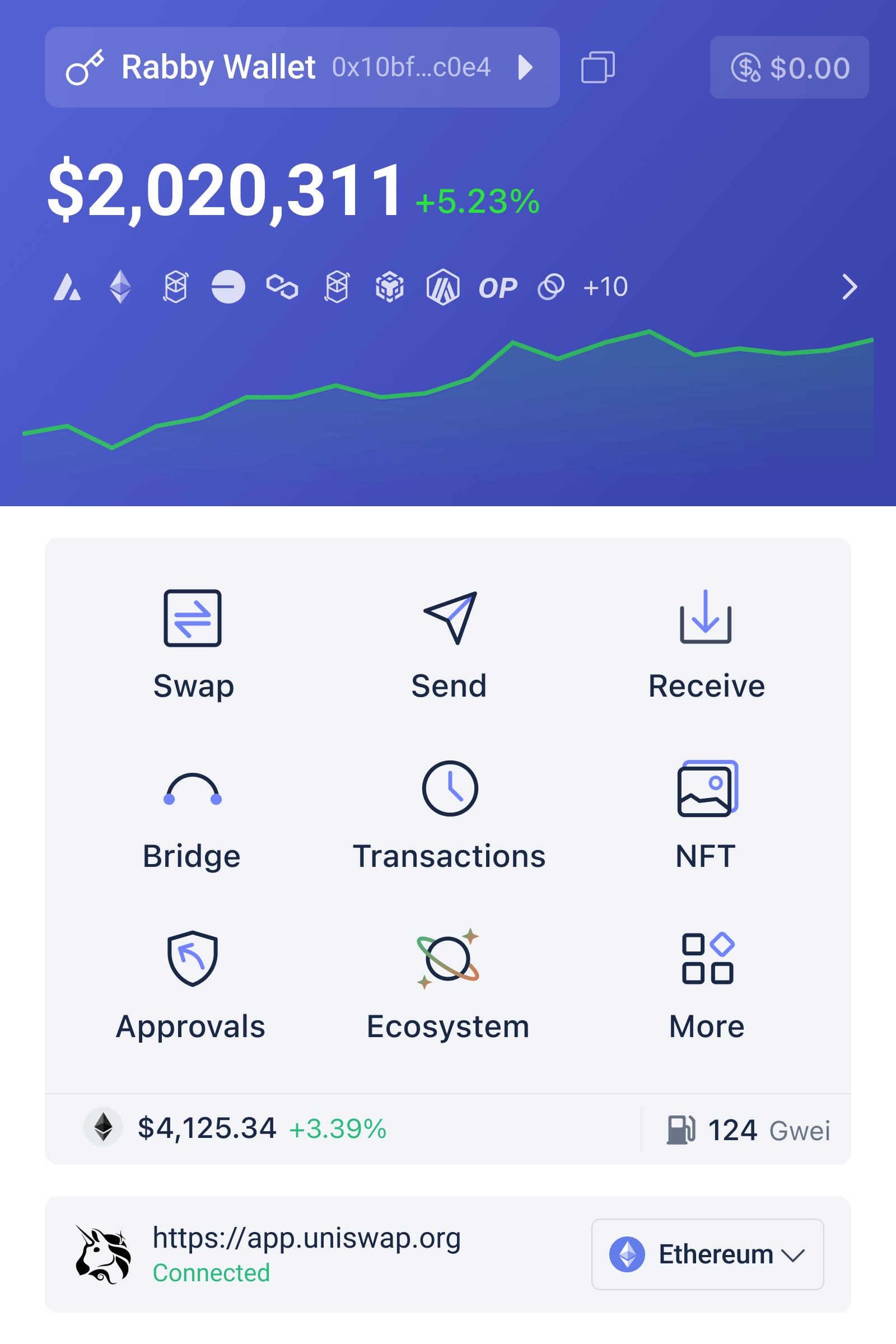
What a cross-chain swap actually coordinates
Suppose a user holds a stablecoin on one network and wants the native asset of another. A cross-chain service may first lock or transfer the original asset, then arrange delivery of the destination asset from liquidity held elsewhere. The two sides do not necessarily settle atomically. In many designs, the user is relying on a bridge contract, a group of validators, a messaging system, or a liquidity provider to complete the second leg.
This creates a useful mental model: a cross-chain swap is a sequence of state changes, not a single exchange. The first state change may be an approval, allowing a contract to spend a token. The next may be a deposit or swap on the source chain. A message, proof, or off-chain instruction then coordinates the destination-chain action. Finally, the recipient receives an asset that may have a different contract address, liquidity profile, or redemption mechanism than the original asset.
The user interface hides much of this complexity because hiding complexity is part of its purpose. Yet the hidden steps are precisely where risk accumulates. A displayed “minimum received” figure may account for market slippage but not fully communicate bridge failure, delayed finality, destination-chain congestion, or the possibility that the received token is a representation rather than the canonical asset. Understanding what is hidden is more valuable than memorizing a list of supposedly safe networks.
There is also a difference between a cross-chain swap and a cross-chain transfer. A transfer attempts to move value in a defined form from one network to another. A swap changes the asset as part of the route. Combining those functions can be convenient, but it means the user must evaluate both transfer security and trading conditions. A low quoted fee can conceal a wider price impact, a less liquid destination asset, or a route dependent on a third party’s inventory.
Three routes, three different compromises
Bridge first, swap later
The most familiar approach is to bridge an asset to the destination network and then trade it there. This can provide access to deeper destination-chain liquidity and make the two stages easier to inspect separately. It also exposes the user to two transactions, two fee payments, and two opportunities for error. The bridge remains a critical dependency, and the user may temporarily hold a wrapped or issued representation whose value depends on the bridge’s design and redemption process.
Aggregated cross-chain execution
An aggregator can compare routes across bridges, decentralized exchanges, and liquidity sources. Its advantage is convenience: the user may obtain a destination asset without manually managing every intermediate step. Its cost is reduced visibility. A single interface can compress several permissions and protocol interactions into one signing flow, making it harder to notice that the route uses an unfamiliar contract or a token with limited liquidity.
Aggregators also optimize according to parameters that may not match the user’s priorities. A route selected for quoted output may be less attractive when execution time, failure recovery, or counterparty exposure matters more. The best route is not necessarily the one with the largest headline amount. It is the route with an acceptable combination of output, trust assumptions, reversibility, and operational clarity.
Intent-based or solver-assisted routes
Some newer designs allow a user to specify an outcome, such as receiving a particular asset on a destination chain, while a solver or market participant arranges the execution. This can reduce the number of actions visible to the user and may improve the experience across fragmented liquidity. However, it introduces a different question: who is responsible for fulfilling the intent, and what happens if the route cannot be completed as expected?
Solver-based execution can be efficient without being risk-free. The user may exchange protocol complexity for reliance on an execution network, settlement rules, or a set of participating parties. This is not automatically worse than bridging manually. It is simply a different risk allocation. The relevant comparison is not “simple versus complicated,” but “which system carries the complexity, and can the user verify the important guarantees?”
Where Rabby Wallet helps—and where it cannot
A wallet is best understood as a decision and authorization layer. It holds or controls the keys that authorize transactions, displays the network and contract involved, and may identify suspicious approvals or unusual interactions. When a user is preparing to install a browser wallet, the safest starting point is to use the project’s official distribution path rather than a search advertisement, copied social-media link, or unsolicited support message. Readers who need the official setup route can review the rabby extension download information before installing.
After installation, security depends on the boundary between what the wallet can observe and what the protocol can do. A transaction simulation may indicate that a contract will transfer a certain token, but simulations are based on current state and assumptions. State can change between simulation and inclusion. A contract may also behave differently depending on the caller, block conditions, or downstream interactions. Warnings are valuable evidence, not an absolute guarantee.
The same principle applies to token approvals. An approval is not the swap itself; it is permission for a contract to spend a token under specified conditions. Broad or indefinite approvals can increase the damage caused by a compromised or malicious contract. A careful user should ask whether the allowance is necessary, whether the spender is the expected protocol, and whether a smaller allowance is sufficient. Revoking unused approvals later can reduce exposure, although revocation itself requires a transaction and does not reverse transfers already authorized.
Hardware wallets can strengthen key protection by keeping signing material isolated from the browser, but they do not solve every problem. A user can still approve a harmful contract on a hardware device if the transaction is misunderstood. Separate accounts can also help: one address for experimentation and smaller balances, another for longer-term holdings, and perhaps a third for routine activity. This compartmentalization limits blast radius, though it adds recordkeeping and operational friction.
A practical review framework before signing
Before approving a cross-chain swap, examine five questions. First, what asset leaves the source chain, and what exact contract address or token arrives on the destination chain? Second, which contracts receive permission to spend funds? Third, what mechanism guarantees or coordinates delivery on the other network? Fourth, what happens if the destination transaction fails, times out, or arrives with less value than expected? Fifth, is the quoted result still reasonable after network fees, price impact, and any service charge?
The fourth question is often neglected. Users tend to focus on whether a transaction succeeds, but cross-chain systems also need a recovery path for partial success. A source-side deposit may be final even if destination-side execution is delayed. Some protocols offer claims or refunds; others require manual support processes or additional transactions. A route that explains failure handling clearly is easier to evaluate than one that merely promises seamless execution.
Small test transactions are useful when the route, token, or destination network is unfamiliar. They do not prove that a protocol is safe, but they can reveal wrong network selection, unsupported token contracts, unexpected fees, or a confusing claim process. The test should be economically small enough that a mistake is tolerable. This is a risk-control technique, not a substitute for checking the protocol and contract.
Users should also confirm the network in the wallet, the destination address, and the intended token denomination. Many assets share similar names, and a token symbol alone is not an identity. On Ethereum-compatible networks, a familiar symbol can refer to different contracts. A wallet display is helpful, but the user remains responsible for confirming that the asset is recognized by the intended application and can actually be sold or redeemed on the destination chain.
The deeper security trade-off: less friction can mean less inspection
Cross-chain products compete partly by reducing the number of decisions a user must make. That is beneficial because complicated interfaces cause mistakes. Yet reducing visible steps can also reduce the user’s opportunity to notice an abnormal approval, an unfamiliar spender, or a destination token that is not what they expected. The design challenge is therefore not maximum transparency in every technical detail. It is meaningful transparency at the points where a decision changes the user’s risk.
This is why wallet security cannot be measured only by whether a wallet has warnings. A useful warning must be timely, comprehensible, and connected to an action the user can take. A user who sees “high risk” without knowing whether the concern is an unlimited approval, an unverified contract, a simulation mismatch, or a limited-liquidity token may still sign reflexively. Security tools work best when paired with a mental model of the transaction.
There is an unresolved industry question here. Better interoperability may eventually make networks feel more unified, but unified interfaces can obscure meaningful differences in finality, governance, bridge security, and asset representation. If cross-chain execution becomes easier, users may transact more frequently and with less deliberate review. That could improve access while increasing the importance of default limits, clear failure handling, and account separation.
For now, the most defensible approach is conditional. If a route uses a well-understood mechanism, has clear destination settlement, requests narrow permissions, and offers a plausible recovery process, convenience may be worth accepting. If the route depends on unfamiliar contracts, unclear representations, or irreversible source-side actions, manual staging or a smaller test is preferable. The decision should follow the mechanism, not the branding.
Frequently asked questions
Is a cross-chain swap safer when it appears as one transaction?
Not necessarily. One visible wallet action may represent several protocol interactions performed by an aggregator or solver. Fewer clicks can reduce user error, but they can also make approvals, bridge dependencies, and destination settlement less obvious. Evaluate the underlying route rather than the number of buttons.
Does Rabby Wallet guarantee that a cross-chain transaction is safe?
No wallet can guarantee the safety of a third-party protocol or reverse a transaction signed by the user. Wallet warnings, simulations, and transaction previews can improve decision quality, but users still need to verify the network, token contract, spender, expected output, and failure-handling process.
Should users revoke every token approval after a swap?
Not automatically. Revoking approvals can reduce the exposure created by unused permissions, but it costs an additional transaction and may make routine use less convenient. Review which contracts retain spending authority and choose an allowance policy that fits the value and frequency of the activity.
The central lesson is simple but easy to miss: a cross-chain swap is an agreement among networks, contracts, liquidity providers, and the person signing the transaction. Rabby Wallet can make that agreement more legible at the authorization point, but the user must still decide whether its assumptions are acceptable. Security improves when convenience is treated as a feature to inspect—not as evidence that the underlying system has become risk-free.